Hair loss can be distressing for those who experience it, and it can affect someone’s self-esteem and overall confidence. With advancements in cosmetic procedures, there are solutions to address these concerns.
Scalp micropigmentation and hair transplants are two popular solutions for individuals to consider, providing hairline restoration which helps regain their sense of self. We investigate the pros and cons of both techniques, helping you to make an informed decision about which approach aligns with your needs and preferences.
Scalp Micropigmentation
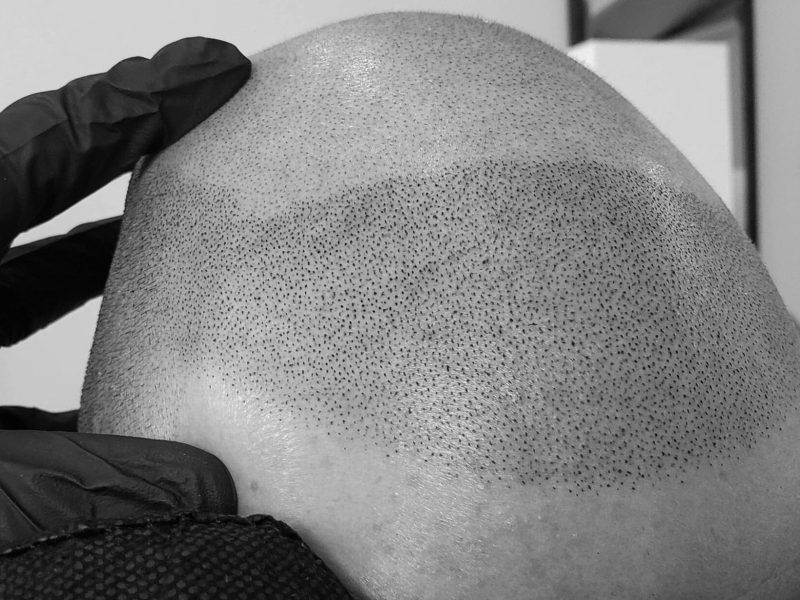
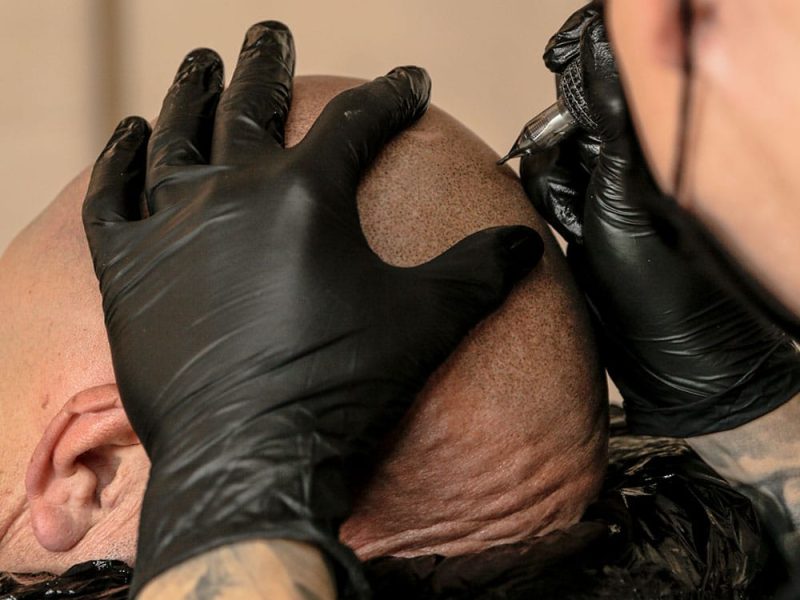
Scalp micropigmentation (SMP) is a non-invasive cosmetic procedure that involves tattooing tiny pigment deposits onto the scalp to simulate the appearance of hair follicles.
Pros of SMP:
- It creates a natural appearance – SMP creates a remarkably natural-looking illusion of hair, especially when executed by a skilled technician. The tiny pigment dots mimic the look of closely shaven hair or a filled-in hairline, resulting in a fantastic realistic effect.
- There is minimal maintenance – Unlike hair transplants, SMP doesn’t require any special maintenance routines. Once the procedure is complete you can enjoy a low-maintenance solution.
- The procedure is non-invasive – SMP does not involve surgery, incisions, or lengthy recovery periods. It’s a relatively quick procedure and most individuals can resume their daily activities shortly after each session.
Cons of SMP:
- It doesn’t make your hair grow. SMP does not make your hair grow like a transplant can and can’t assist in stimulating hair growth.
- SMP doesn’t feel like hair. Although SMP gives the natural illusion of hair, it doesn’t physically feel like hair.
Hair Transplants
A highly invasive procedure, hair transplants involve surgically transplanting hair follicles from one part of the body (usually the back or sides of the head) to areas with thinning or no hair.
Pros of Hair Transplants:
- Longer-lasting transformation – Hair transplants usually offer a longer-term solution to hair loss, as the transplanted hair follicles are resistant to balding, providing long-lasting results.
- Growth is natural following the procedure – The transplanted hair grows naturally, and you can treat it just like your existing hair by washing, styling and cutting it as you desire.
- High hair density – Hair transplants can provide a higher hair density result in comparison to SMP, making it suitable for individuals seeking a fuller, thicker head of hair.
Cons of Hair Transplants:
- A hair transplant is a highly invasive procedure – Hair transplant surgery involves incisions, potential scarring, and a recovery period that may require time off from work and other activities.
- There’s a risk of complications – As with any surgical procedure, there is a risk of infection, bleeding and other complications during or after the surgery.
- The procedure can be costly – Hair transplants are often more expensive than SMP due to the surgical nature of the procedure.
Choosing between scalp micropigmentation services and hair transplants depends on your individual preferences, hair loss pattern and overall desired end results. Scalp micropigmentation offers a non-invasive, natural-looking solution with minimal maintenance, However, hair transplants provide a more permanent and higher density result but involve surgical procedures and have more potential risks.
Before making your decision, it is crucial to consult with qualified professionals who can assess your unique needs and goals, can guide you towards the best option for your needs. Whether you opt for the realistic solution of SMP or the restoration of hair with a transplant, the choice is yours to take a step towards revitalising your appearance and self-confidence.
For more information on scalp micropigmentation procedures as a hair loss solution for men and women or to book your consultation, get in touch with our skilled and experienced professionals by visiting our contact page. Our scalp micropigmentation practitioners are on hand to answer any questions you may have and to guide you through the process.